The Second Youngest
Aaria Rathi

© Copyright 2026 by Aaria Rathi
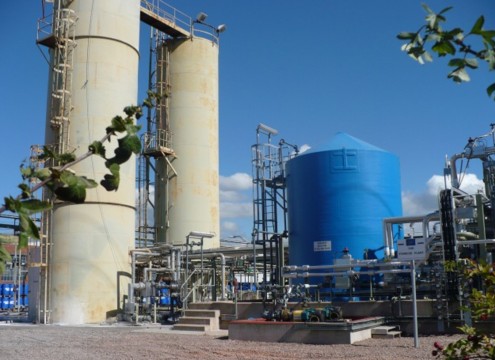
Photo by Robert Drayton at Wikimedia Commons.
The Second YoungestAaria Rathi © Copyright 2026 by Aaria Rathi |
Photo by Robert Drayton at Wikimedia Commons. |
This is the same man who built four companies. The same man who opened factories, made a fortune and became a multimillionaire through a career built around chemistry and manufacturing. The same man who, according to the stories I have heard, was once the mischievous second youngest of six children who spent his childhood playing and loved going to school.
I find that contradiction difficult to ignore.
My grandfather's name is Ashok. He grew up in Nagpur in a normal-sized house with five siblings. His parents ran a business, and education was important in the family. He was not the eldest, and he was not the youngest. He was the second youngest, somewhere in the middle of a household of six children. From everything I have been told, he was the fun one. The naughty one. He played a lot, enjoyed himself and loved school.
It is difficult for me to imagine that version of him.
The grandfather I know is associated much more with rules. He is very strong-minded, extremely opinionated and almost relentlessly particular about the way things should be done. If something can be done better, he expects it to be done better. If he thinks someone is being careless, he will say so. If he thinks someone is wrong, he is not particularly interested in pretending otherwise simply to keep the peace.
Sometimes, that makes him difficult. Sometimes, it is one of the things I admire most about him.
He is not someone who is easily influenced by what everyone else thinks. Once he has made up his mind, changing it is a challenge. He is used to making decisions, taking responsibility for them and expecting people to follow through. Perhaps that is partly because he has spent so much of his life running businesses. Perhaps it was always part of his personality.
He is also extremely resourceful. If something needs to be figured out, he finds a way to figure it out. He has an enormous amount of knowledge, and chemistry in particular has always been one of his strengths. My family describes him almost casually as a genius at the subject, as though that were simply another fact about him.
He went on to study chemical engineering at a prestigious Indian university. His education became the foundation for the work he would eventually do, but he also gained practical experience before starting his own business. He completed an internship in an area closely connected to what he later built: the manufacturing of mining explosives.
The connection seems important to me. His businesses were not something he stumbled into completely by accident. There was a subject he was exceptionally good at, an education that gave him the technical knowledge, practical experience in the industry and, eventually, the decision to build something of his own.
He did.
He opened factories. Then more than one company followed. Today, he owns four companies and is a multimillionaire.
But money is probably one of the least interesting things about him.
The number of companies he owns can be counted. His wealth can be measured. His factories can be seen. His personality is harder to quantify.
He is the sort of person who can know an extraordinary amount about something and still be interested when someone teaches him something he does not know. He has not allowed age or success to convince him that there is nothing left to learn. He is still curious, still asks questions and still remains open to new ideas.
That is one of the qualities I respect most.
He also has a deeply religious side. He worships God regularly and has continued to do so throughout his life. His faith has remained important to him even as everything else around him has changed.
There is something almost contradictory about seeing a man who has spent his life making highly practical business decisions also place so much importance on something spiritual.
But contradiction seems to be a recurring theme with my grandfather.
He is traditional in some ways and modern in others. He has very specific ideas about how a family should behave, yet he is open to new knowledge. He can be extremely strict, yet he can also be incredibly warm. I see that particularly in the way he treats my younger brother.
There is an ease between them that I notice because I do not always experience the same softness from him myself. With my younger brother, he can be affectionate and playful. With me, I sometimes feel more of the expectations that come with being his eldest granddaughter.
Perhaps he expects more from me.
Perhaps that is simply how our relationship developed.
I do not really know.
What I do know is that he can be frightening when he is angry. Everyone knows when my grandfather is angry. There is a seriousness to him that becomes impossible to ignore. He is accustomed to being the person responsible for decisions, and that authority does not disappear when he comes home.
But being intimidating and being uncaring are not the same thing.
My grandfather cares deeply about his family. He simply has a very particular way of showing it.
Before becoming a father, my grandfather became a husband through an arranged marriage. His marriage was completely arranged. There was no long period of dating or years of getting to know each other first. It was a decision made in the way marriages were often arranged at that time.
For them, marriage was a duty.
They never really became a couple in the way I might imagine a couple today, but they stayed married. It is difficult to understand a relationship formed under a completely different set of social expectations, especially when looking at it from the perspective of someone growing up now. At the time, this was simply how things were done.
That sense of duty seems to have stayed with my grandfather throughout his life.
Family is a duty.
Work is a duty.
Doing something properly is a duty.
Perhaps that is why he has such strong expectations. Perhaps, to him, caring about something means taking responsibility for it.
He has three children. My father is his eldest son, followed by another son, his middle child, and then his youngest child, a daughter. I am my father's eldest daughter, which makes me his eldest granddaughter.
Being his eldest granddaughter means that I have grown up watching him from a slightly different position than everyone else. I have seen the businessman, the grandfather, the strict person, the knowledgeable person and the person who can unexpectedly be very warm.
I have also seen how much he dislikes being disobeyed.
There are family rules that everyone knows without needing to write them down. Ask before getting up from the table. Eat at the table on certain days. Follow the routine after dinner. There is almost always a reason behind them, although sometimes I am still trying to figure out what that reason is.
They can seem unnecessarily specific.
But they are very him.
When I think about him now, I find myself going back to the boy I never knew.
The second youngest of six.
The child in Nagpur who grew up with educated parents who ran a business.
The mischievous child who played a lot.
The boy who loved school.
It is strange to think that he was once that person. The man I know now seems so far removed from him. The CEO. The businessman. The person who built factories. The man whose anger can silence a room.
But perhaps they are not as different as they seem.
The boy who loved school became the man who never stopped learning. The mischievous child became a strong-minded adult who has always done things his own way. The son of business owners became a businessman himself. The child from a family of six became the head of a family of his own.
And the person who was apparently so much fun as a child became a man who takes almost everything seriously.
Almost.
Because there is still warmth there.
There is still curiosity.
There is still the willingness to learn.
And somewhere underneath the CEO, the businessman, the perfectionist and the intimidating grandfather is still the second youngest child who played a lot and loved going to school.
I sometimes wonder whether he realises how many versions of himself exist in the memories of other people. His siblings remember the second youngest. His children remember their father. His employees know the CEO. My father knows his father.
And I know my grandfather.
None of us knows the entire person.
I certainly do not.
There are huge parts of his life that happened before I existed. There are decisions I know only from their results. There are stories about his childhood that I know only because someone else remembered them.
That is one of the strange things about being a grandchild. You meet someone at one point in their life and assume that is who they have always been.
But my grandfather was not born a businessman.
He was not born a CEO.
He was not born a multimillionaire.
He was a boy from Nagpur, one of six children, the second youngest, who liked school and played a lot.
Everything else came later.
The companies. The factories. The chemistry. The money. The family. The rules. The responsibility. The reputation.
And somehow, underneath all of it, there is still the same person.
My grandfather.
The second youngest of six.
I think that is the version of his story I want to remember most.
Not
because it is the most impressive.
Because it is the beginning.