The Man Who Built Bridges Before Roads: The Life and Legacy of Gul Afridi
Arif Rehman Khan

© Copyright 2026 by Arif Rehman Khan
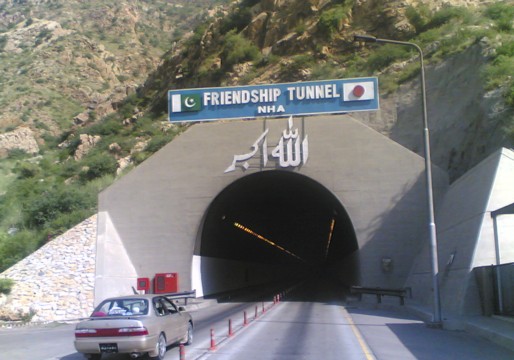
Photo by Manzoor Ahmad at Wikimedia Commons.
The Man Who Built Bridges Before Roads: The Life and Legacy of Gul AfridiArif Rehman Khan © Copyright 2026 by Arif Rehman Khan |
Photo by Manzoor Ahmad at Wikimedia Commons. |
Growing up, Gul Afridi’s name was a constant presence in our home long before I ever understood the full scope of what he did. To my father, he wasn’t merely a respected acquaintance or a regional elder—he was a rare force of nature, a man who possessed the stubborn, quiet belief that an individual’s life is only as valuable as the burdens they carry for others.
In Dara Adam Khel, a valley historically defined by its rugged independence, strict tribal codes, and deep-seated traditions, leadership usually came attached to land, lineage, or martial power. Elders were respected because of their age or the weight of their family name.
Gul Afridi was different. He earned his stature through pure utility. Where others saw bureaucratic brick walls, impassable mountain terrain, or hopeless family feuds, he saw practical work that simply needed doing.
The Cradle of Dara Adam Khel
To understand Gul Afridi, you first have to understand the land that shaped him. Situated in the mountain pass between Peshawar and Kohat, Dara Adam Khel has long existed in a unique space. For generations, it was a place where state institutions felt distant, and survival depended almost entirely on self-reliance, local custom, and mutual defense.
It was a tough environment, but it produced people with a sharp sense of honor, courage, and community obligation. Growing up in this setting, Gul Afridi absorbed its finest qualities—an unyielding loyalty to his people and an unshakable belief in keeping one's word—while looking beyond its historical limitations.
He recognized early on that while traditional values provided identity, isolation was quietly killing his region’s future. Without reliable roads, decent healthcare, structured education, and modern law and order, even the proudest community would eventually stagnate. He realized that true courage wasn't just about defending old borders; it was about opening new doors for the next generation.
The Quarter-Century of Service (1996–2021)
For over twenty-five years—stretching from the mid-1990s through to his passing in 2021—Gul Afridi threw himself into the grinding, often thankless work of community development. He didn't treat public service as a platform for personal ambition, nor did he use it to hunt for titles or photo opportunities. To him, helping his neighbors was an unwritten obligation.
What made him uniquely effective was his ability to move effortlessly between two completely different worlds:
The Corridors of Bureaucracy: He could walk straight into the high-ceilinged offices of the Civil Secretariat in Peshawar, sit across from senior civil servants or government ministers, lay out a village’s grievances with razor-sharp clarity, and refuse to leave until a practical order was signed.
The Floor Mats of the Hujra: He could return home the same evening, kick off his shoes, sit on a braided floor mat in a local guest house, and drink tea for hours with aggrieved villagers, listening to every detail of their concerns without ever checking his watch or raising his voice.
"Gul had a rare, quiet strength," my father used to tell me. "He had complete authority without an ounce of pride, and immense courage without any need to raise his voice. He could talk to a provincial governor and a penniless farmer in the exact same tone of voice, making both feel heard and respected."
The Mountain, the Pass, and the Asphalt
For decades, the journey between Peshawar and the southern districts of Khyber Pakhtunkhwa was a grueling ordeal. Travelers had to navigate the treacherous, winding curves of the old Kotal Pass—a steep mountain road notorious for breakdown-inducing gradients, slow-moving heavy freight, unpredictable weather, and constant safety risks.
What should have been a quick drive often turned into a multi-hour crawl. For a sick patient needing emergency care in Peshawar, or a farmer trying to get fresh produce to market, the mountain was a physical barrier locking them into poverty.
When discussions began around major infrastructure improvements—specifically the Peshawar–Kohat National Highway and the ambitious Kohat Tunnel project (later known as the Friendship Tunnel)—the challenges were not merely engineering ones. In the tribal belt, large-scale infrastructure projects frequently stalled over complex right-of-way issues, land compensation disputes, tribal boundary friction, and deep-seated suspicion of outside government intrusion.
This was where Gul Afridi’s leadership proved indispensable.
He understood that a road was never just a layer of crushed stone and hot asphalt. To him, it was a lifeline. He spent months traveling from village to village, holding endless discussions with landowners and local maliks. He explained how the tunnel would transform their lives, settled land disputes before they could escalate, and guaranteed that local workers received fair compensation and employment opportunities on the project.
When the Kohat Tunnel opened, cutting through the mountain and slashing travel times down to minutes, engineers received the public accolades. But those who lived along the route knew that without the patient, diplomatic ground work laid by men like Gul Afridi, the heavy machinery might never have been able to operate safely at all.
Building Beyond the Road: Education and Faith
Yet, Gul Afridi was adamant that physical infrastructure was only half the equation for genuine progress. He frequently argued that a community equipped with good roads but lacking moral and intellectual grounding would only find faster ways to ruin itself.
He poured an equal amount of energy into supporting local educational and civic institutions. Among his most cherished efforts was his long-standing support for Jamia Dar ul Uloom Islamia, which served as a crucial regional center for learning, community gatherings, and moral guidance.
He viewed education not as a luxury for the wealthy, but as an absolute prerequisite for lasting peace. In his view, supporting schools, seminaries, and community spaces was an investment against the cycles of ignorance, extremism, and violence that had plagued the borderlands for far too long. He wanted the youth of Dara Adam Khel to be as comfortable with books and modern ideas as their ancestors had been with rifles.
Standing in the Gap: Security and Mediation
Perhaps the most defining chapter of Gul Afridi’s life was his willingness to run toward trouble when everyone else was backing away.
During the turbulent years when security in Khyber Pakhtunkhwa deteriorated, ordinary families lived under a cloud of constant anxiety. When security concerns spilled over into Hayatabad—a key residential area of Peshawar bordering the tribal region—fear began to disrupt daily life, schooling, and commerce.
While many prominent figures chose to stay indoors or relocate to safer cities, Gul Afridi stepped directly into the breach. He established a direct line of communication with the Chief Minister’s Office of Khyber Pakhtunkhwa, law enforcement officials, and community leaders. He pushed for sensible, practical security measures that protected neighborhoods without harassing innocent citizens. He didn't issue grand public statements; he coordinated action, followed up on daily implementation, and restored confidence where panic had taken root.
Even closer to home, his work as a mediator in tribal jirgas saved countless lives. In a region where personal feuds over land, water, or honor could spiral into blood rivalries lasting generations, Gul Afridi used his patience, deep knowledge of Pashtun customary law (Pashtunwali), and impeccable personal integrity to broker peace.
He had a remarkable ability to sit through hours of heated, emotional arguments without losing his temper. He would wait for anger to burn itself out, find the small kernel of common ground both sides had overlooked, and guide them toward an honorable compromise. He understood that in a dispute, a resolution only works if neither side feels humiliated.
A Quiet, Unfading Legacy
Gul Afridi never built a political empire around his persona. He never sought to convert his public service into personal wealth or high electoral office. He belonged to an older, noble generation of elders who believed that if God gave a man influence, wisdom, or standing in his community, it was meant to be spent entirely in the service of those who had none.
Looking back at his quarter-century of work, his greatest achievement wasn't a single highway, a specific school building, or a signed peace agreement. His greatest achievement was the quiet confidence he restored in ordinary people—the belief that someone was standing in their corner, ready to knock on doors, face down difficult problems, and fight for their dignity without asking for anything in return.
Today, whenever ambulances race smoothly through the Kohat Tunnel, whenever students travel safely between Kohat and Peshawar, whenever children sit down to study in local classrooms, and whenever old family feuds are settled over green tea instead of gunfire, Gul Afridi’s silent footprint is there.
His life leaves us with a timeless truth: communities rarely transform because of distant institutions or grand national slogans. Real progress usually begins at home, driven by one determined person who simply refuses to accept that a problem is impossible to solve.