Clouds Don't Salute
Hridoy Kundu

© Copyright 2026 by Hridoy Kundu
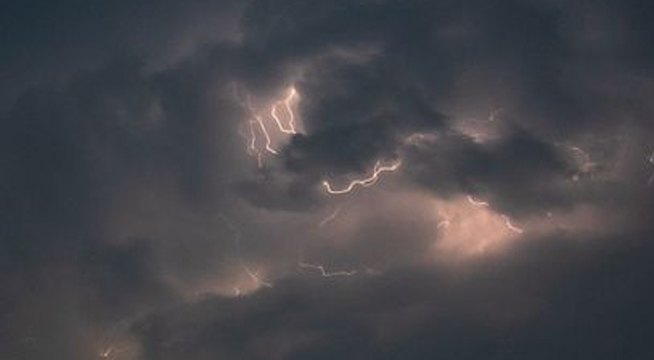
Photo by Muhammed zeya at Pexzels
Clouds Don't SaluteHridoy Kundu © Copyright 2026 by Hridoy Kundu |
Photo by Muhammed zeya at Pexzels |
My dadu distrusted three things: people who arrived late, tea that had gone cold, and anyone who claimed to know exactly what the weather was going to do.
“The sky,” he once told me, “does not read the newspaper.”
I was nine or ten when he said this, sitting across from him with absolutely no interest in meteorology.
It was raining outside. Not dramatically. Just one of those steady rains that turns the windows gray and makes the whole afternoon feel unfinished. Dadu had been watching water collect along the edge of the veranda while I complained that the rain had ruined whatever extremely important plan a child of nine could possibly have had.
“It was supposed to be sunny,” I said.
“Supposed to be?”
He looked at me.
“Yes.”
“Who told you?”
“The weather.”
This answer seemed to amuse him.
“The weather told you about the weather?”
“The forecast.”
“Aha.”
He took a sip of tea.
Dadu could make aha sound like a complete legal argument.
Then he tapped the window with one finger.
“Clouds don't salute.”
I had no idea what that meant.
“What?”
“Clouds don't salute,” he repeated. “They don't care who you are.”
That was when he told me the story.
Before he became Dadu, before grandchildren and retirement and afternoons spent arguing with television news, he had been a pilot in the Indian Air Force.
I knew this, technically.
There were photographs. There were stories adults mentioned around me. There was the general family understanding that my grandfather had once spent a considerable portion of his life doing something much more exciting than telling me to finish my vegetables.
But children are bad historians.
We accept astonishing information about adults without examining it.
Your father used to have long hair. Your grandmother was once younger than your mother. Your grandfather flew military aircraft.
Fine.
Can I have another sweet?
It took me years to understand how strange it was that the man sitting across from me with a cup of tea had once looked down at the earth from a cockpit.
But on that rainy afternoon, he gave me a glimpse.
He had been young then, he told me. Very young.
“How young?”
“Young enough to believe I knew everything.”
“How old is that?”
“Every age before thirty.”
I laughed.
He did not.
Then he laughed too.
It had happened early in his career. He had not been flying long enough to become wise, but he had been flying just long enough to become confident, which, in his opinion, was much more dangerous.
That morning, the weather report had been acceptable.
Not perfect.
Acceptable.
Clouds were gathering beyond the airfield, but nothing that seemed particularly threatening to a young pilot eager to fly.
An older man on the ground disagreed.
In Dadu's telling, this man had spent so many years around aircraft that he could detect trouble from the way a mechanic closed a toolbox.
He looked toward the horizon.
Then he looked at my grandfather.
“Sir,” he said, “that weather is coming this way.”
Dadu looked at the report.
The report said otherwise.
The older man looked at the sky.
Dadu looked at the paper.
The man looked at Dadu again.
My grandfather paused here.
“What did you do?” I asked.
“What do you think?”
“You listened to him.”
“No.”
“Why?”
“Because I was an idiot.”
He drank his tea.
This was one of the things I loved about Dadu. His stories rarely improved his own reputation.
Families have a way of polishing their stories. People remember themselves as slightly braver, slightly wiser, slightly more innocent than they probably were.
Dadu had no such concern.
If young Dadu had behaved foolishly, old Dadu seemed delighted to report it.
So he went flying.
For a while, the sky appeared determined to reward his arrogance.
Visibility was good. The aircraft behaved exactly as it should. The clouds remained distant.
And somewhere inside his young head, a particularly dangerous sentence began forming:
See? I knew it.
Then the horizon disappeared.
Not gradually.
One moment there was distance.
The next there was gray.
Rain struck the canopy until individual drops blurred into a sheet. The earth vanished. His shoulder pulled against the harness as the aircraft lurched, and for a moment the instruments became the only horizon he had left.
With the earth gone, the engine seemed suddenly enormous.
The aircraft dropped.
Not far, Dadu said.
Far enough.
His stomach arrived a fraction of a second after the rest of him.
“How bad was it?” I asked.
He shrugged.
This irritated me.
Dadu had a habit of shrinking the most interesting parts of stories.
“Very bad?”
“Bad enough.”
“Were you scared?”
Another shrug.
I leaned across the table.
“Dadu.”
He looked at me.
“Were you scared?”
This time he answered.
“Yes.”
That single word changed the story.
Until then, I had imagined pilots as people who existed above fear.
They wore uniforms. They understood machines. They climbed willingly into aircraft.
Fear seemed like something that happened to passengers.
But there was my grandfather, telling me that somewhere inside a cloud, decades before I was born, he had been afraid.
“What did you do?”
“My job.”
That disappointed me.
I wanted something cinematic.
A heroic maneuver. Lightning. An engine failure. A desperate radio call.
Something that would justify leaning forward.
Dadu gave me none of it.
He checked what needed checking.
He trusted the instruments when his eyes could no longer help him.
He remembered what training had taught him before the storm arrived and fear made remembering difficult.
Most importantly, he stopped caring whether he had been right on the ground.
“Being right,” he told me, “becomes a very small ambition once the world has proved you wrong.”
He concentrated.
The rain hammered the canopy.
The aircraft bucked again.
His hands stayed where they had been trained to stay.
Eventually, the gray began to thin.
First light.
Then distance.
Then earth.
The sky released him.
That was how Dadu described it. Never that he conquered the storm. Only that eventually, it let him go.
He returned safely.
When he finally came down, the older man was waiting.
This, according to Dadu, was the worst part.
“Worse than the storm?”
“Much worse.”
“Why?”
“Because he did not say anything.”
Apparently, there are few forces in nature more powerful than an older person who warned you about something and has decided not to say I told you so.
The man simply looked at him.
Dadu looked back.
The silence continued.
Finally my grandfather said, “You were right.”
The man nodded.
That was all.
“No speech?” I asked.
“No.”
“He didn't yell at you?”
“No.”
“What did he say?”
Dadu smiled.
“He asked if I wanted tea.”
I remember being profoundly dissatisfied with this ending.
“That’s it?”
“That is it.”
“You almost flew into a storm and then you drank tea?”
“We drink tea for many reasons.”
Even at nine, I had to admit this was true.
But there was one more part.
As they stood together, Dadu looked back toward the weather.
The clouds were moving across the sky without urgency, as though they had done nothing wrong.
The older man noticed him watching.
“Sir,” he said, “clouds don't salute.”
My grandfather laughed when he repeated the line.
I did too, although I still did not completely understand it.
“A uniform can make a young man feel important,” Dadu said. “People call you sir. They wait for your instructions.”
He pointed toward the window.
“But clouds don't care. Neither does gravity.”
“So flying makes you humble?”
“Eventually.”
“Eventually?”
“The sky is very good for pride.”
“Good for it?”
“It removes some.”
At nine, I thought the story was about a storm.
Dadu ignored good advice. Dadu got frightened. Dadu survived. Everyone drank tea.
Excellent story.
Years later, I began to suspect the storm was the least important part.
I noticed that Dadu listened carefully to people others sometimes overlooked: drivers, mechanics, shopkeepers, workers carrying luggage. He seemed suspicious of the idea that importance and knowledge were the same thing.
If someone knew something he did not, he listened.
Perhaps he had always been that way.
Or perhaps somewhere early in his career, a man on the ground taught a young pilot that wisdom does not always arrive wearing the highest rank.
Dadu also distrusted certainty.
“This will definitely happen.”
“There is nothing to worry about.”
“That can never go wrong.”
Such sentences annoyed him.
He preferred preparation.
Check again. Bring the umbrella. Leave early.
Ask the person who actually knows.
As a child, I found this irritating.
As I grew older, I began wondering how many of these habits had once belonged to the cockpit.
For roughly three decades, from the 1950s into the 1980s, my grandfather served as a pilot in the Indian Air Force.
Thirty years is easy to write.
It is much harder to live.
When his career began, independent India was itself young. The Air Force he entered would not be the same one he eventually left. Aircraft changed. Technology changed. The people beside him changed.
The young pilot changed too.
That is something photographs cannot show.
A photograph freezes a man.
A life does the opposite.
When I look at old photographs of Dadu now, I sometimes try to perform an impossible trick.
I try to remove my grandfather from his own face.
I study the set of his shoulders, the way he looks at the camera, the almost-smile that seems either confident or nervous depending on how long I stare.
I search for the young man underneath.
I wonder whether the pilot in those photographs would recognize the grandfather he eventually became.
More strangely, I wonder whether I would recognize him.
There is an unfairness in being born late into someone's story.
You meet a person after most of the plot has already happened, then spend years mistaking the final chapters for the entire book.
To me, Dadu had always been Dadu.
But he had once been a young man holding a weather report and deciding that an older man's warning was probably unnecessary.
He had wanted to be right.
He had been frightened.
He had needed to learn.
That makes me love the story more than if he had told me he was fearless.
Fearless men make excellent statues.
They are much less interesting as grandfathers.
Dadu became something better than fearless.
He learned to listen.
He learned that returning safely mattered more than proving he had been correct when he left.
And perhaps that is why, when I think about his military life, I do not first think about uniforms or aircraft.
I think about tea.
History prefers large things.
Wars. Medals. Victories. Dates.
Families preserve people differently.
A grandfather says something at a table.
A child laughs.
Years pass.
Then one afternoon the child, now older, suddenly understands what the grandfather meant.
And the story begins flying again.
Dadu's Air Force career eventually ended.
The aircraft remained behind. The uniform stopped being everyday clothing. The young pilot became an older man.
Eventually I arrived, knowing nothing about the long road that had brought him to me.
I called him Dadu.
Two syllables.
A whole life hidden behind them.
Sometimes I wish I could return to that rainy afternoon.
I would ask better questions.
What aircraft were you flying?
Where were you?
Who was the man who warned you?
Did you ever see him again?
What did the clouds look like from inside?
How long were you afraid?
Did your hands shake once you landed?
Was the tea actually good?
Children never know which details they will someday desperately want.
At nine, I wanted the storm.
Now I want the tea.
I want to know whether the cups were metal or porcelain. Whether Dadu drank quietly because he was embarrassed. Whether the rain had reached the airfield by then. Whether those two men stood watching it together, one old enough to know better and the other suddenly old enough to learn.
I cannot recover every flight Dadu ever made.
Thirty years of sky cannot fit inside one story.
But perhaps remembering someone does not require everything.
Perhaps one thing, remembered clearly enough, can carry the rest.
A rainy afternoon.
A cup of tea.
An old story.
A sentence about clouds.
That afternoon eventually ended.
The rain weakened until individual drops became visible again on the glass.
Dadu stood near the window, still holding the tea he had forgotten to finish.
By then it must have been cold.
Beyond him, the clouds were moving away.
He watched them for a moment.
Then he looked at me.
“Remember,” he said.
I expected some grand piece of military wisdom.
Instead he pointed upward.
“Those fellows don't salute anybody.”
And he laughed.
For most of my childhood, I thought my grandfather had spent his life mastering the sky.
The
sky had spent thirty years teaching him how to come back down.