Elvis Has Not Left The Building
Janet Peterson
© Copyright 2026 by Janet Peterson

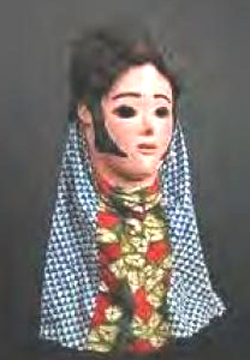
Photo courtesy of the author.
Elvis Has Not Left The BuildingJanet Peterson © Copyright 2026 by Janet Peterson |
Photo courtesy of the author. |
My Way marked the show's end, and we heard the trademark announcement, "Elvis has left the building!"
The King died two and a half months later on August 16, 1977.
Fast forward nearly forty years to 2010, and I am delighted to say that, in a sense, "Elvis has NOT left the building." Allow me to explain.
My husband Jon and I arrived in Zambia about a year before the new embassy building was ready for occupancy. My husband was the Information Management Officer. I managed the off-site commissary, so a new embassy building didn’t affect my operation. Jon’s workload increased as he prepared for the move from the old building to the three-story, modern, high-tech building. I visited on opening day and was delighted to see beautiful works of art placed throughout the spacious, modern building. Large paintings, sculptures, and Zambian artifacts adorned offices, hallways, and open spaces.
I was not a frequent visitor to the new embassy, yet I began hearing reports that employees saw “The King” lurking in various places within the Embassy, such as the freight elevator or at the top of the stairs near the entrance to the ambassador’s office. Friends told me that no one knew how he moved from place to place (although there was a list of suspects), but I agreed with others that it was probably the Marines. I wanted to see him for myself.
I finally saw “The King”, and he lived up to all my expectations. There he stood, nestled snugly within his tall glass vitrine, nose-to-elevator button, at the first-floor lift: lamb-chop sideburns, wild black hair, a checkered cape, and hollowed-out eyes that made me laugh out loud. Suddenly, I understood why some called the traditional African mask ugly, while others praised it as a unique, museum-worthy work of art. Like the real Elvis, it demanded your attention.
No one knows the artist's name or when the mask was made. A Chewa artist most likely made the Elvis mask. Their masks have been an essential part of performances by the secret Nyau society, which was banned by the British (the UK governed Zambia from 1911 to 1964) due to its secrecy.
The Community Liaison Officer gave me a photo and the following information:
Masquerade is a complex art form that involves many elements: costumes and masks, music, choreography, lyrics, and the ambient situation (location, weather, time of day, etc.). Masquerade has existed in Africa for millennia and is still actively practiced today. Dances and masks have different meanings for different audiences: some are secret, others public, with layers of meaning for each.
The Chewa Elvis masquerade of Zambia and Malawi developed after the American singer became well known in Africa in the 1950s and 1960s. All Elvis masks include certain elements:
· A thick, pompadour wig
· Long lamb-chop sideburns
· Bright, pale skin
· A narrow-upturned nose
· Thick, slightly parted lips
Young male dancers perform provocative, gyrating routines that perfectly mimic Elvis Presley’s iconic hip movements. This masquerade exemplifies how African traditional art forms have adapted and evolved, especially in response to global influences over the last century.
The most recent Elvis migration was an homage to the embassy's efforts and successes: he stepped up on the platform recently vacated by our honored Secretary of State, sporting an AGOA (African Growth and Opportunity Act) badge with his name in bold letters: 'ELVIS'! Even the ambassador and the Deputy Chief of Mission were willing to share the stage with him.
So, where will you spot Elvis next?
*****
Janet, an avid birdwatcher, and her husband, Jon, who worked for the State Department, spent almost twenty years overseas, working and living in developing countries such as Cameroon and in culturally and economically stable countries such as Norway. She witnessed and experienced situations that the average American couldn’t fathom. She self-published and printed 200 copies of From the Arctic Circle to Zambia and Exotic Places In-between. More than half were given to family, friends, people mentioned in the book, and to the libraries of the embassies in Cameroon, Switzerland, Costa Rica, Zambia, and Norway.
Retired now, she spends her time restoring an old Victorian house they found in Georgetown, Delaware. She volunteers with TriState Bird Rescue and Research, which means she sometimes captures Bald Eagles or feeds tiny baby birds. She also enjoys monthly meetings with friends at The First Saturday Writers Group.