The Fluorescent and the Eternal
Memoir
Krishna Kumar

© Copyright 2026 by Krishna Kumar
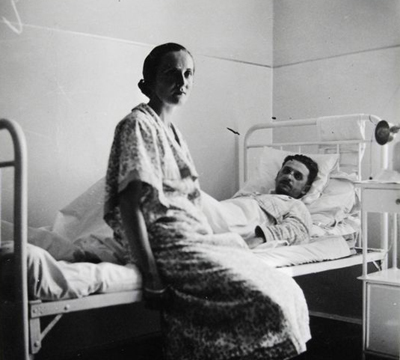
Photo by Allen Beilschmidt at Pexels.
|
The Fluorescent and the Eternal Memoir Krishna Kumar © Copyright 2026 by Krishna Kumar |
Photo by Allen Beilschmidt at Pexels. |
When I opened my eyes, I was strapped to a ward bed, staring at a fluorescent tube that buzzed with the flat, indifferent energy of a place that never sleeps.
There were fourteen of us in that ward.
Not six, as I had first imagined in my confusion—fourteen, spread across two long rows of beds, separated by thin curtains that offered the illusion of privacy but none of its substance. Fourteen people, fourteen different diseases, fourteen different stories arriving at the same fluorescent-lit room from different directions.
A retired schoolteacher had survived a cardiac episode and was navigating the aftermath with the careful precision of a man who had learned, late, that the body keeps its own schedule. A software professional, younger than me, worked on a laptop propped against his knees, carrying on with his job as though hospitalisation were merely an interruption he could not afford. A chartered accountant received visitors in the afternoon as though conducting meetings, his voice low and measured even from behind the curtain.
People from different walks of life, different professions, different circumstances—all temporarily reduced to the same white sheets and the same fluorescent hum.
We were connected in ways I had not expected.
There is something that happens when people share a room like that—not friendship exactly, and not the easy camaraderie of a waiting room or a long train journey. Something quieter. A mutual recognition.
Each of us had, in some way, been handed the same piece of information: the body is not as reliable as we had assumed. It contains within it the possibility of betrayal.
That knowledge does not make strangers into friends. But it makes them witnesses. I watched the others and they watched me, and in that watching there was a kind of solidarity that required no words.
But there was one among us who was different.
He was in the bed closest to the window—a man in his fifties, I estimated, though illness had made him ageless in the way severe illness sometimes does, stripping the face of the marks of ordinary time and replacing them with something else entirely. He had advanced blood cancer, I learned. He was rarely conscious enough for conversation. Most of what I knew came from the sounds behind his curtain at night.
His family was always there. A wife sat with her hands folded in her lap, her eyes fixed on some middle distance that held nothing. A son stood at the foot of the bed with his arms crossed, as though bracing himself against something. Younger relatives came and went in shifts, speaking in low voices that still carried across the ward in the silence of three in the morning.
The nurses were kind to them.
This is what I remember most clearly—the particular kindness of nurses in a situation where medicine has reached its limits. They came when called. They adjusted the drip, checked the monitors, smoothed the sheets. They spoke gently to family members who waylaid them in the corridor with questions they could not answer and fears they could not resolve.
Their role was to give medicine. Beyond that, they could only soothe.
And they did this with a grace I have thought about many times since, because it is not a small thing to offer comfort when you have no cure to offer alongside it.
I watched all of this from my bed and thought: that could have been me.
Not the disease—mine was lymphoma, and my doctor had told me it was curable. This was the word he used on his morning rounds, standing at the foot of my bed with my file open in his hands: curable.
But he said it carefully, with qualifications attached.
Curable, but requiring careful evaluation. Curable, but with relapse a possibility that could not be dismissed.
Curable did not mean cured. It meant I had a chance, and that the chance was real, but I had to remain vigilant. I must not mistake remission for arrival.
The diagnosis itself was something I had endured with a particular part of myself still performing normalcy—making plans, answering questions, telling my children it would be fine.
But the ward at three in the morning stripped that performance away.
Unable to sleep, I simply lay awake. The atmosphere would not allow sleep. The smallest sound travelled through the room: a monitor, a footstep, a cough, the movement of a curtain.
In the small hours, survival is not noble.
It is breathing. Measuring the distance between oneself and the darkest corner of the room. And when that darkness closes in, holding the distance like a lifeline.
The nightmares came then—not always during sleep, but in the thin space between waking and unconsciousness, where the mind runs without supervision.
They were not dramatic nightmares. There were no visions of death, no symbolic imagery. They were practical, specific, and terrifying.
I dreamed of relapse.
Of sitting in a doctor’s office and being told that the lymphoma had returned. Of beginning again—the scans, the needles, the twelve rounds, the floor coming up to meet me.
I dreamed of my children’s faces receiving the news. I dreamed of my spouse’s grip loosening, not from lack of love but from exhaustion, from the sheer weight of having to go through it again.
I knew what the doctors had told me. Relapse was a risk.
Lymphoma was different from the illness of the man by the window. My prognosis was more hopeful.
But at three in the morning, distinctions offered little comfort.
What I held onto instead was something simpler.
The doctor’s voice saying curable.
The drawings my children had taped to the wall beside my bed—a house, a sun, figures with round heads and stick arms standing in a row.
My spouse’s hand in mine each morning, the particular grip of someone who had decided not to fall apart in front of me.
These were not arguments against fear. They were simply presences.And presence, I learned in that ward, is its own kind of medicine.The man by the window was moved somewhere—I presume to another ward, or perhaps home, though I never asked. You learn in a place like that not to ask about absences.
One morning a bed is occupied. The next, it is empty, the sheets fresh. By afternoon, someone new arrives.
The ward continues its fluorescent hum as though nothing has changed. For the ward, nothing has. I still think of the others sometimes—the schoolteacher, the software professional, the chartered accountant. I think of the family by the window: the wife with her hands folded, the son bracing at the foot of the bed.Ido not know how their stories ended.Mine continued.My family came in the mornings. My spouse sat close, said little, and held my hand. My children had sent drawings, which a nurse taped to the wall without being asked. She must have done it many times before.
I looked at those drawings when the night became too loud.
I was in that ward for fourteen days.
When I finally walked out, the security guard nodded at me as though the thin, missing hair had changed nothing. The city outside was loud and indifferent, doing brisk business.I stood at the entrance for a moment, blinking in the ordinary light, and felt something I could not immediately name—not relief, not triumph, not even gratitude.
Something quieter.The simple fact of standing.Of being outside.
Of being part of a city that had continued without noticing my absence.Icontinued my work. It was my first decision: to return to the ordinary rhythms of life, not allowing the ward to become my only reality.But I carried new knowledge with me.
I knew what to watch for: blood counts, weight loss, the specific signals my body might send if the lymphoma stirred again. Every disease has its own language of warning, and I had learned mine.
I did not become obsessed with it. But I did not look away from it either.Vigilance, I understood, was not the same as fear. It was a responsible relationship between a person and a body that had once declared its capacity for betrayal.The fresh beginning was quieter than I had imagined a fresh beginning would be.
There were walks—long walks along the beach in the early morning, before the city fully woke, when the light was still uncertain and the water moved without urgency.
There was the deliberate decision to be outside, to be in the presence of things indifferent to illness—the sea, the sky, the particular quality of light on water that has nothing to say about prognosis or survival rates or the distinction between curable and cured.I stood at the water’s edge on those mornings and let the body simply be a body in the world, breathing salt air, feeling the sand shift beneath my feet.
Nature does not require anything of you.It does not need you to be well or sick, brave or afraid, surviving or merely enduring. It continues regardless.
In that continuity there was something I could rest in.
Meditation came next.The discipline of sitting still, of watching the breath move in and out without trying to control it, of noticing the mind’s relentless narration and learning, slowly, not to be entirely governed by it.
In the ward I had counted my breaths out of fear.In meditation I counted them out of attention.The action was the same. Its meaning had changed.
Meditation did not cure anything. But it changed my relationship with my body—from one of suspicion to one of watchful companionship.
Ten years have passed since that ward, that fluorescent hum, those fourteen souls in two long rows.
I go to my check-ups alone now. Once, that felt impossible. Now it feels ordinary.Not because I am no longer afraid, but because I have learned that fear and action can occupy the same moment.
The statistics, the stages, the percentages that doctors offer as consolation have always felt hollow to me.
What is not hollow is the morning light on the water.My children are grown now. They no longer tape drawings to walls, but they carry within them the particular knowledge of children who have watched a parent come close to the edge and step back.
My spouse’s hand is still steady.
The fluorescent tube in that ward buzzed all night without pause.
Flat. Indifferent. Faithful.
It did not distinguish between us—the curable and the incurable, the early-stage and the late, those who would walk out and those whose paths would take them elsewhere.In that, at least, it was honest.We were all the same under its light.And in the morning, those of us who remained hoped for the next day.The ward continued.The city outside did brisk business.And somewhere on a beach, the water moved without urgency towards the shore and back—indifferent and eternal, and quietly, stubbornly alive.
*****