Beginning
Laurie Mackie
©
Copyright 2026 Laurie Mackie
|
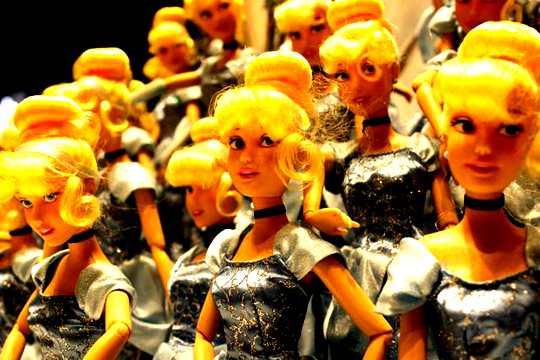
Photo by Reshma Mallecha on Pexels |
/in’sepSH(ǝ)n/
noun:
the
establishment or
starting point of an institution or activity
Where,
how to begin?
I don’t know the answer to either. Too much to think about. So
much to sort through, to settle in my thoughts.
Perhaps
with:
I'm
a boomer, a bulge. One minuscule dot in that twenty-year statistical
hump in birth rates between '46 and '64. The data divers say we
shaped the Canadian economy. We bent the social structures.
Apparently, in our getting older age, we still do. The Millenials
(1981 – 1996) and Gen Zs (1997 – 2012)—must every
generation have a label?—have different opinions. We destroyed
the environment, overburdened the economy, and left our young to
support us in our dotage. Perhaps we did. Maybe we have. But in our
days we fought. We broke the status quo. We marched and died for
peace, rights, and equality.
Me?
I was born in the last month of the last year of the 1950s. A
different realm in those days. I roamed, walked to school alone,
joined the scads of trick-or-treaters on Halloween. Yes, my parents
scanned the bounty for pins, needles, razor blades even then, but I
still walked the streets, filling pillowcases with booty. Stranger
danger? The
ignorance, a denial of a
reality that would later produce generations of terrified, paranoid
parents and children. It’s hard to describe
the
furor? ire? rabidity? in my gut when I think about the truth of it.
Rant over. For now. Because it’s never truly over. Just melts
into my inner lava pool.
Then,
metric
measurements were someone else's bright idea. We counted in
gallons—gas twenty-five cents at the pumps, quarts—a
four-quart jug of milk was a dollar one—and cups. We licked
grocery store green stamps and stuck them in a book—my mother
saved enough to trade for a wooden box of plated silverware. Bread,
twenty cents. A four-quart jug of milk, a dollar one cent. Kraft
cheese slices, thirty cents. The St. Lawrence Seaway opened shipping
from the Atlantic to the Great Lakes.
March
9, 1959. Ruth
Handler, co-founder of the Mattel toy company, launched the Barbie
doll. Complete with wedding gown. She was based on the risqué
German Bild Lilli doll. Moms didn’t appreciate her…assets. Bypass Mom
and hit the kids during the Mickey Mouse Club show.
Conveniently sponsored by Mattel. It worked. Handler mass-produced
generations of girl-children who wanted to grow up to become
"Barbie." Forty-one movies, hundred and twenty-four comics
and four hundred-plus books later, she’s still wrinkle and
sag-free, even though
her Old Age
Pension kicks in in April 2024. Ken showed up in 1961, but Barbie
remained an “independent” woman despite a couple dozen
wedding gown incarnations.
And
World War II was
almost fifteen years behind us. Those war years showed us what we
could do. On our own. Without husbands, brothers, and fathers.
We—women—raised children alone, made do with food
rationing, worked the factories, supplied munitions for the front,
and maintained the economy. Barbie would have shrivelled and
disappeared into the dust at the first broken pastel-pink fingernail.
We overcame male employers who thought us hormone-ridden,
none-too-bright and wrapped in Special Handling Required stickers.
Male Supervisors:
How
to Manage PMS Overwrought, Slightly Dim-witted Females
manuals
and training films were "au courant" with advice to
successfully manage a female workforce:
“Choose
husky
women; they're likely to be more even-tempered than their underweight
sisters. Older women who have never contacted the public have a hard
time adapting themselves and are likely to be cantankerous and
fussy.”
Men
returned from
the fronts, and women were supposed to return to their kitchens—no
doubt more cantankerous than before. In government and employer eyes,
past roles of breadwinner and decision-maker were anomalies meant to
die a quick death. That didn't happen. Despite Leave
it to Beaver, Father Knows Best, and
The Adventures of Ozzie and Harriett—television
series determined to convince women of the joys in wifery and
mummery, remind men of who's-who in the pecking order—we
flocked to the workforce.
Women's rights organizations
formed, and trade unions became interested. But there was pushback.
Backed by government
policy
and Unemployment Insurance schemes, companies refused to hire married
women. Single women could work. Until
marriage. But instead of the
high-pay factory/corporate/management
positions, we were left to the low-pay domestic/service/hairdresser/waitress
jobs.
Come the sixties and seventies? Father
Knows Best
crumbled.
Golden
Happiness
Naked child —
the arc of every rib
carved into her
skin. She runs,
twisted gaping
mouth, arms fanned
like the curled
wings of a wounded bird.
Listen…
Bare
feet slap the
pavement.
Skin
blisters on her
back, shears
away like cellophane
rolls off
of a plate —
potluck jellied napalm.
She glows
translucent yellow, lit
by a sun
incandescent to the bone.
Nóng
quá,
nóng quá —
too
hot, too hot
Vietnam.
1954 –
1975. The second-longest conflict—how’s that for a
euphemism—in American history. Only Afghanistan topped the
list. Images of women, children running from charcoaled homes, men on
doors— those makeshift stretchers—a naked girl-child
trying to flee her flesh-charred burns. Golden Happiness. In
Vietnamese: Phan
Thị Kim Phúc Oont.
Otherwise known as The Girl From Vietnam. Otherwise known as The
Napalm Girl. Otherwise known as The Girl in the Picture. A photo of a
nine-year-old girl napalmed by the South Vietnamese in Trảng
Bàng. She was the face of the war. Our young screamed in
protest, rioted in the streets. Our borders opened for draft dodgers
even as our own left to fight.
Photos:
The National
Guard holds the line. A woman stands, fingers curved around a pink
flower, a foot away from a Guardsman, his rifle loaded, an unsheathed
bayonet pointed at her throat. Kent, Jackson State, New Mexico.
Scarlet pools on grass and concrete. Six dead, twenty-one injured,
eleven bayoneted. I was eleven then. They were…nineteen?
Twenty? These were schools. Full of students. Like me. I never
thought—.
Music:
War, Get
Together, The End, For What It’s Worth, Gimme Shelter, All
Along the Watchtower, Street Fighting Man, We Gotta Get out of This
Place, Fortunate Son, Ohio, Paint It, Black. Eve of Destruction. The
playlist runs in the background. The lyrics halt my keyboard taps. I
see their faces, the children who went to war. Five, five and a half
decades ago and today. Only the faces have changed.
Today.
We have not
learned.
Today.
I have not
learned.
I
gotta get out of
this place.
Erase
the river
mists, free the lost, release that knobby little girl with
daydreams in her eyes.
But
then, there’s
the other side of the coin: Haight-Ashbury. San Francisco. Turn
on, tune in, drop out. Love beads,
mini-skirts, magic
mushrooms, acid. Flower power. Peace. Free sex—stolen sex. The
"Pill" legalized in 1969. Woodstock: 450,000
counter-culture strong. Janis Joplin, Jim Morrison, Jimi Hendrix,
Elvis Presley on the Ed Sullivan Show—Got a really, really
good shew tonight—they’ed all be gone before the 70s
flipped to the 80’s. He, Elvis, was filmed from the waist up;
his lower half gyrations not fit for television. The Beatles at
Vancouver's Empire Stadium—cops hold the fences up and
screeching girls back. Mom’s oldest niece, my eldest cousin,
lived The Beatles, sang and danced to I Wanna Hold
Your
Hand in my grandmother’s kitchen.
This
was my stage.
Born into the cusp between two decades, not belonging to either.
There are two in this body, opposite ends of the spectrum,
traditionalist and rebel, unreconciled. Neither of us has learned a
damn thing. I’d crafted a successful "outside" life,
yet nights were re-runs, taunts of would-have, could-have, who I
should have been and wasn't.
I
never questioned
this divide. Not out loud. The hectic decades made it simpler to
ignore…everything, to shove it aside. Raising kids, juggling a
career, and surviving the day-to-day made it easy to shut out the
depression, the anxiety, the why, where, when, and how. I had a rule:
Find one thing every day that makes me laugh.
I broke the rule.
I am an angry
person.
I don't like what
I've become.
But, I am a
Pollyanna.
I'd
never read
Eleanor H. Porter's 1913 Pollyanna. Had to research the premise
behind the term. The description is close enough. I am/was the
eternal optimist, always with hope, a belief that I'd find that
intangible "thing" I look for, that place of belonging. I
detest my personal Pollyanna. With hope, there is hurt.
I'm
stalling. I
don't want to dive into this…this.
My
bones are weary.
My
heart is weary.
My
first poetry
instructor had a mantra. "Be brave," she said.
I
will be brave.
Here.
Start here.
Beware
thoughts
that come in the night.
William Least Heat-Moon
Blue
Highways
Here,
bare bulbs
hang from the ceiling, the glass singed. A third gleams apricot,
barely lifts the burnt umber in the far corners. Grimed casement
windows reject daylight. Cobwebs drip from the whitewashed stone
walls. A one-time root cellar given over to seldom-visited storage. I
shiver and cough in the dank. Not these, but other walls were a
refuge once. The unused basement in Markdale was an underground
shelter on a deserted island, the L-shaped barn on the Clan's
homestead near Granton, Ontario, an uninhabited fortress. Gone now,
the farm. Sold out. For the first time in two hundred years,
strangers work the fields. Or not. Farmers. They're a dying breed.
It's been fifty years since I, since any of the Clan stepped foot on
the place. The bulb dims, flickers a warning.
Advance.
Retreat.
Decide. Before dark reclaims the stained boxes stacked in the corner.
Is that all, then? Five and a half decades crammed into two banker’s
boxes? My own doing, this habit of non-accumulation, non-attachment.
We've always been on the move—following Dad on his search for
only he knew what. Joe, our kids, and I—no better. The boxes
are the exception to the rule. Those I drag with me from house to
house, province to province. They’re useless, really. Like the
farm, I've not revisited any of them until now.
Now.
Start at the
beginning. The box labelled Treasures, the lowest
rung on the
ladder, the hardest to tote from the shadows.
I
should have asked
Joe to sidestep down the cellar's ancient, creaking wooden stairs to
cart it up for me, but he'd lecture, hector, demand reasons I don't
have. I've renamed him, this husband of mine, not that it changes who
or what he is any more than I can slip from my skin into another's.
Names are changed to protect the innocent. Like the
intro
disclaimer on crime documentary television programs.
Upstairs,
I lean
back in the black secretary chair and sip from the I Love My
Grandma mug my eldest granddaughter gave me twenty-five years
ago. This room is my sanctuary. Joe built it for me, accommodated my
demand for a corner bay window. It overlooks the river. I watch the
eagles swoop for salmon, the deer who pick their way up the
embankment and across the pocket-handkerchief yard. The miniature
gardens filled with lilac, witch-hazel, Rose of Sharon, Weeping
Mulberry. My goldfish pond.
The
box squats on
the carpet. Go ahead. I double-dog dare you. Open it, c'mon,
do
it. DO IT. I know this is a mistake; this delving into
things
best left alone. Never go back. You can never go back. In
the
bedroom, Joe chokes on a bubbling snore. Perverse,
on its own
accord, my foot flips the lid onto the carpet.
Inside
are my
memories—photos of my Grade Eight Ottawa trip, the clay bead
and leather necklace from Kingston, newspaper clippings from my park
protest days, the Parisienne toy doll now over a hundred years old.
And some of my journals, labelled by month and year during one of my
grown-up organizational fits. It's a misnomer to call them by that
name. Journal implies something more formal than a
ragtag
collection of lined exercise books. Eventually, they did grow up. I
smile, remembering my bike basket loaded with beer bottles scrounged
from ditches, peeling into the Beer Store to exchange my haul for
five or ten, or
fifteen
cents. He
never objected, the Beer Store man. Things weren't so fussy in 1968.
When enough coins rattled in my tin can bank, I pried one side of the
slot up enough to shake loose the required money to trade the
five-and-ten for a hard-cover, lock-and-key diary. Where the journals
don’t exist, my memory-photos do.
The
first book,
then. 1962-1964. Thorold. Mom can't quite remember the street name.
Harold, Hoover, Leslie? I can't find the place it might have been.
Much has changed over sixty years. I'll call it Hoover. I learned to
write in 1962, courtesy of some television program whose name escapes
me. The cover creaks. Dry glue dandruff spots my lap. The pencilled
letters are lopsided, some backward, some words misspelled, all faded
but decipherable. Each entry begins Dear Jeannie;
ends with
Your Friend, Laurie. Jeannie was the
reality-adapting,
bottle-residing genie from the 1960s sitcom I Dream of
Jeannie.
She was the fixer. She was my best friend, my alter-ego, everything I
would never be. Jeannie was the beginning, the birth of the
chronicles. I lean back in my chair and finger trace the letters on
the page.
Enough.
Tuck the
exercise book back in its box, replace the lid, run my hand over the
top, draw an un-smiley face in the dust. What was, was. What is, is.
The thing of it: learn to go on from here. When choice evaporates, I
can get used to, live with, anything. This, I've learned. Joe pokes
his head through the doorway.
More
coffee?
No,
thanks. Put this
back in the cellar, will you please? No, no, wait.
He
shrugs and heads
to the kitchen. I slide off the chair and sit crossed-legged on the
floor. My freshly tattooed ankle protests. I'm proud of that tattoo,
my bravery. It's a gift. From me to me. My design—a Celtic knot
dolphin, leaping from white-crested waves—shades of blue,
blue-green. I've always been a water baby.
My
mother tells and
retells the story of Algonquin Park’s Rock Lake. In those
early, early years, we camped there every summer. How she’d
plopped me down at water’s edge. I’d waded ever deeper.
How she’d watched, waited, expected me to stop at waist, chest,
chin, nose depth. Her frantic rescue just before my head disappeared.
I carry only a fragment of memory from those trips—that of
being lost in the fog after a trip to the outhouse. Mom says she
found me sitting by the firepit in another campsite, magpie-chatting
with its residents.
I
crave the lakes,
rivers, and streams, spent all my lives beside them or at least
within driving distance. Without them, I wilt. A friend once
commented that I must be an Aquarian. I laugh at the irony of it—a
Sagittarian under the fire sign. But, then again, the dichotomy seems
appropriate. Water must adapt, find its way around and over the
obstacles it faces. I like that thought—resilient, tenacious,
unrestrained, creating its own path.
I
retrieve the
copybook, carefully turning the pages as I read. Details are sparse.
I didn't have enough words yet. Whatever kid’s television show
I’d learned from didn’t teach the vocabulary I needed.
Not in 1962. Not at two, two and a half. But there are enough. Enough
to remember and fill in the blanks.
(Unless
you
type
the
author's name
in
the subject
line
of the message
we
won't know where to send it.)
Book
Case
Home
Page
The
Preservation Foundation, Inc., A Nonprofit Book Publisher