Youcai Luo

© Copyright 2026 Youcai Luo
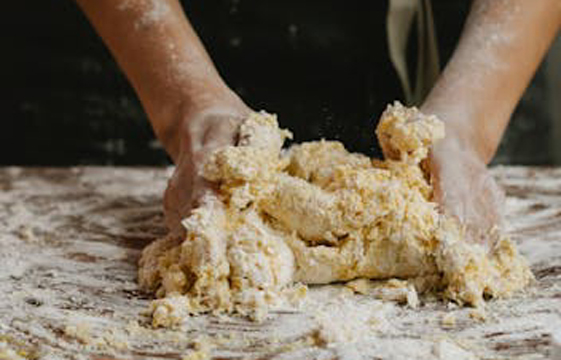
Photo by Klaus Nielsen at Pexels.
| The
Noodle Man Of West Street Youcai Luo © Copyright 2026 Youcai Luo |
Photo by Klaus Nielsen at Pexels. |
Everyone in our neighborhood called him Old Chen, though I never learned his given name. He made noodles on West Street for forty-seven years, and if you grew up within a kilometer of his shop, you knew the sound of his dough hitting the board before you knew your own phone number.
His shop—if you could call it that—was a narrow storefront wedged between a bicycle repair stall and a place that sold cheap socks. The sign above the door read "Chen's Hand-Pulled Noodles" in faded red characters, though half the paint had flaked off by the time I was old enough to read it. The "C" had vanished entirely, so it looked like "hen's," which became a neighborhood joke that Old Chen never acknowledged and never corrected.
I first noticed him properly when I was nine. My grandmother had sent me to buy a jin of fresh noodles for dinner. I walked into the shop with my crumpled bills and found a man who looked like he'd been carved from the same dough he worked. Short, thick arms. A face the color of unbleached flour. Hands that moved with a rhythm so steady it seemed mechanical, except that no machine could replicate the particular way his knuckles whitened when he pulled.
"One jin," I said.
He didn't look up. Just kept working. The dough stretched between his hands—pale, elastic, alive—folded, twisted, stretched again. His arms moved outward, and a single thick rope became two, then four, then eight, then sixteen thin strands, each one thinner than the last, until they hung in the air like silk threads.
"Sit," he said.
I sat on a plastic stool by the wall. There were three stools, all different heights, all the same shade of faded pink. A calendar from 2003 hung crooked on the wall. A radio played something old and scratchy.
He cut the noodles with a single quick motion, weighed them on a scale that looked older than him, wrapped them in a sheet of thin paper, and slid the package across the counter.
"Three yuan," he said.
I handed him a five. He made change from a tin box without looking at it.
"You watch too much," he said. Not mean. Just an observation.
I didn't know what to say to that, so I left.
But I came back. Again and again. Sometimes my grandmother sent me. Sometimes I went on my own, buying a small bowl of noodles from the few seats in the back, watching him work through the gap in the curtain that separated the shop from the kitchen.
Old Chen was not a friendly man. He didn't chat with customers. He didn't smile. When people asked him how business was, he'd say "Still here," which could mean anything and probably meant exactly what it said.
But he let me watch. That was something.
The process always began the same way. Flour on the board—a mountain of it, pale and soft. He'd make a well in the center, pour in water mixed with a pinch of salt and a splash of what I later learned was alkaline solution. Then his hands went in, rotating, pressing, folding. The dough came together slowly, reluctantly, like a stubborn animal being coaxed into a pen.
He kneaded for exactly twelve minutes. I timed him once. Twelve minutes, every time, as though the dough itself had a clock.
Then he'd cover it with a damp cloth and let it rest. This was the part he seemed to care about most. "The resting is the work," he told me once, when I asked why he just stood there doing nothing for twenty minutes. "You think the dough doesn't do anything? It's learning. It's remembering."
I didn't know what dough could possibly remember. But I nodded like I did.
After the rest came the pulling. This was the part people came to watch. He'd roll the dough into a long cylinder, grip it at both ends, and swing it outward in a motion that looked part dance, part fight. The dough stretched, thinned, folded back on itself. Each pull doubled the strands. The sound it made—a soft, wet slap against the board—was the sound of West Street, more familiar than traffic or birds or the calls of vendors selling sweet potatoes.
He could make seven sizes. From thick, chewy ropes the width of your little finger down to hair-thin threads so delicate they'd cook in seconds. People in the neighborhood had preferences. Old Mrs. Wang liked them thick—"something to chew on." The schoolteacher, Mr. Liu, wanted them thin as thread, "the way my mother made them." Old Chen never wrote anything down. He just remembered.
I asked him once how long it took to learn.
"To make noodles? A year." He was wrapping an order, not looking at me. "To make them right? Still learning."
He'd started as an apprentice at fourteen. His own master was a man from Shandong who'd opened the shop sometime in the 1950s. Old Chen—just Chen then, young Chen, boy Chen—had been the fourth apprentice taken on, and the only one who stayed.
"The others left?" I asked.
"The others had better options," he said. "I didn't."
He said it without bitterness. It was a fact, like the weather or the price of flour.
When his master died—Old Chen was thirty-two by then—he took over the shop. Same board. Same stools. Same recipe. He changed almost nothing. "If it works, you don't fix it," he told me. "You just keep showing up."
He showed up every day. Not just most days. Every day. He opened at six in the morning and closed at two in the afternoon. The noodles were made fresh each morning; when they were gone, they were gone. If you came at one-thirty and the board was clean, you came back tomorrow.
"Why not make more?" I asked him once.
"Why not make worse?" he said. "Same question."
I didn't argue. By then I was twelve or thirteen, and I'd eaten enough of his noodles to understand that the limited quantity wasn't stubbornness. It was the only way to maintain the standard. More noodles meant more batches, less rest time for the dough, a rushed hand on the pull. The quality would slip. And once it slipped, what was the point?
West Street changed around him. The bicycle repair stall became a phone case shop, then a bubble tea stand, then nothing. The sock vendor expanded, adding underwear and towels. A chain noodle shop opened three doors down—bright, clean, with pictures on the menu and delivery via app. Young people went there. Old Chen didn't seem to notice or care.
"Doesn't it bother you?" I asked. "The competition."
He looked at me like I'd said something mildly stupid.
"They sell noodles," he said. "I make noodles."
That was the longest philosophical statement I ever heard from him.
When I was sixteen, I started working mornings in his shop before school. He didn't ask me to. I just showed up one day at five-forty-five, and he handed me an apron without comment.
The mornings were cold and dark. The flour felt different at that hour—cooler, heavier. I'd help him measure, mix, and knead while he told me things in fragments. Not lessons, exactly. More like thoughts that occurred to him while his hands were busy.
"The water matters. Too soft and the dough won't hold. Too hard and it fights you."
"In summer, you rest the dough less. In winter, more. The temperature doesn't care about your schedule."
"You think pulling is strength? Pulling is listening. Your hands feel when the dough is ready. If you pull too early, it breaks. Too late, it's tired."
I was not a natural. My noodles came out uneven—some strands thick as rope, others snapping mid-pull. He'd watch me struggle and say nothing. Only once, when I'd mangled a batch so badly it couldn't be salvaged, did he speak.
"You're angry at the dough," he said.
"I'm not angry."
"You're pulling like you want to hurt it. The dough isn't your enemy."
I looked at my hands. They were white with flour, trembling slightly from the effort.
"Start over," he said. "Slower this time."
I got better. Not good—never good enough for him to praise, which I eventually understood was its own form of respect. But better. I could pull a consistent medium noodle, thick enough to have bite, thin enough to cook in two minutes. Nothing fancy. But honest.
The neighborhood kept changing. They repaved West Street, which meant three months of construction dust settling on Old Chen's board. He covered the dough with extra cloth and kept working. A developer bought the building across the street. Rumors circulated that the whole block would be demolished for a shopping center.
Old Chen heard the rumors. He shrugged.
"They've been saying that since 1998," he said.
He was right, sort of. They'd been saying it since 2005, actually. Close enough.
I left for university when I was eighteen. Came back less often. Then work took me further away. But every time I visited my grandmother, I'd go to West Street, sit on one of the pink stools, and order a bowl.
Old Chen was always there. Always at the board. Always the same rhythm—knead, rest, pull, cut. His hair went fully white. His hands developed tremors that he seemed to will away when they touched the dough. He was thinner, but his arms remained thick, the muscles carved from decades of the same motion repeated ten thousand times.
"You still making them?" he asked once, when I came in during a Spring Festival visit.
"Making what?"
"Noodles."
"No," I admitted. "Not for years."
He nodded, unsurprised. "Most people don't."
"You're disappointed."
"No." He pulled a batch—sixty-four strands, each one even, each one perfect. "You learned something. That's enough."
"What did I learn?"
"That it's hard." He cut the noodles and wrapped them. "Most people never find that out."
I thought about that for a long time after.
The demolition notice came in the spring of 2023. Not a rumor this time—an actual red stamp on actual paper taped to the door of every shop on the block. Relocation offers were made. Compensation discussed. Some shopkeepers negotiated. Others raged. A few accepted quietly.
Old Chen read the notice, folded it, and put it in his back pocket.
His daughter—she lived in the next province, ran a small accounting firm—came to help him sort through things. I heard about it from my grandmother, who heard it from Mrs. Wang, who heard it from the sock vendor. The daughter wanted him to retire. Move in with her family. Rest.
He refused.
"Rest for what?" he said, apparently. "I'm not tired."
The shop closed on a Monday in June. No ceremony. No last-day celebration. Old Chen simply didn't open. The next morning, the door was locked. The sign was still there—"Chen's Hand-Pulled Noodles"—but the lights were off, and the board where he'd worked for forty-seven years was gone.
I don't know where the board went. I didn't ask. Some things you don't need to know.
The building came down in August. By the following spring, there was a parking structure where West Street used to be. Clean, functional, entirely without character. The kind of structure that could be anywhere and mean nothing to anyone.
Old Chen moved to a small apartment near his daughter. I visited him once, on my way through his city. The apartment was tidy and small and smelled like nothing at all. He sat in a chair by the window, reading a newspaper.
"You want tea?" he asked.
"Sure."
He made it slowly, carefully—measuring the leaves, waiting for the water to cool to the right temperature. The same patience. The same unhurried hands.
"Do you miss it?" I asked.
"The shop?" He thought about it. "I miss the work. Not the shop. The shop is just a room. The work is the thing."
"Do you still make noodles?"
"No kitchen for it." He looked at his hands. "But I still feel the pull. Right here." He flexed his fingers. "Some mornings I wake up and my hands are doing the motion. Pulling nothing. Like a habit the body won't give up."
He sipped his tea. Looked out the window at a street he didn't know.
"You know what I think about?" he said. "Not the noodles. I think about the dough resting. That twenty minutes where you do nothing and everything happens. That's the part I miss most."
"The resting?"
"The trusting," he said. "You trust the dough to become what it needs to become. You don't rush it. You don't force it. You wait. And it works."
We sat quietly. Outside, children were playing in a small park. The light was good.
"You should write this down," he said suddenly.
"What?"
"Whatever you remember. About the shop. About the noodles." He looked at me. "People should know there was a man who made noodles on West Street. That he did it the same way for forty-seven years. That he never made them worse to make more."
"Why does it matter if people know?"
He set down his cup.
"Because it happened," he said. "That's reason enough."
Old Chen died the following winter. Quietly, the way he'd done everything. His daughter called to tell me. The funeral was small. I couldn't attend, but I sent flowers and a note that said: "He never made them worse to make more."
She wrote back and said she didn't understand the note, but she was glad I'd sent it.
Sometimes, in the morning, when the light is soft and the kitchen is quiet, I take out flour and salt and water. I make a well. I knead for twelve minutes—exactly twelve, I still time it. I cover the dough with a damp cloth and let it rest.
During those twenty minutes, I do nothing. I don't check my phone. I don't plan my day. I just wait, the way he waited, trusting the dough to become what it needs to become.
My noodles are still not as good as his. They probably never will be. But they're honest. And every time I pull them—slow, listening, careful—I think of the narrow shop on West Street, the faded sign, the pink stools, and a man who showed up every day for forty-seven years to do one thing right.
He was not famous. He was not wealthy. He was not, by most measures, remarkable.
But he made noodles. And he never made them worse to make more.
I think that matters. I think that's enough.