Cuito
Cuanavale
Ezra Azra
(c)
Copyright 2026 by Ezra Azra
|
|
The town of Cuito Cuanavale is in the country of Angola which is south of the equator in western Africa. ‘As the crow flies,’ the town is approximately 150 miles north of Angola’s southern border with the country of Namibia,
From approximately July 1987 to August 1988 a military battle was fought in and around Cuito Cuanavale, by two foreign armies that had entered Angola in order to engage each other.
The one opponent was from the East, an army from Whites-only apartheid-racist South Africa, led by General Geldenhuys.
The other opponent was from the West, an army from Cuba, led by Fidel Castro who was the President of Cuba, at the time.
It was the largest and first full-scale modern military tank battle on the continent of Africa since the first world war of 1939-1945.
The battle was fought continuously for approximately fourteen months, from 1987 to 1988. The Cubans won the battle decisively.
When the Whites-only apartheid-racist South Africans were defeated, they retreated helter-skelter across the southern border of Angola into Namibia, by the same route they had entered to engage the Cubans in the year before.
Because there were no non-White citizens of South Africa available in Angola, Fidel Castro invited to enlist volunteer non-White South African civilian refugees from all over the world. Those civilians were uniformed, and served as unarmed health-care assistants.
Among those many South African non-White uniformed civilians who served at Cuito Cuanavale in Fidel Castro’s command, was Rajaluxmi Pillay. She was the only non-White refugee South African Indian woman living in Holland at the time who had volunteered to serve in Angola.
Rajaluxmi Pillay was wounded in action, and taken prisoner by the enemy. She survived, and lived in Durban, Natal, South Africa, after the Whites-only Afrikaner apartheid-racist regime was no longer in existence.
Rajaluxmi Pillay died of natural causes in Durban, South Africa, in the year 2020.
In 1994, after 46 years of being in politically elected power, South Africa’s apartheid-racist Whites-only Government was defeated in the Country’s first-ever all-ethnicities political democratic national election.
That final defeat in 1994 had begun seven years earlier, at Cuito Cuanavale.
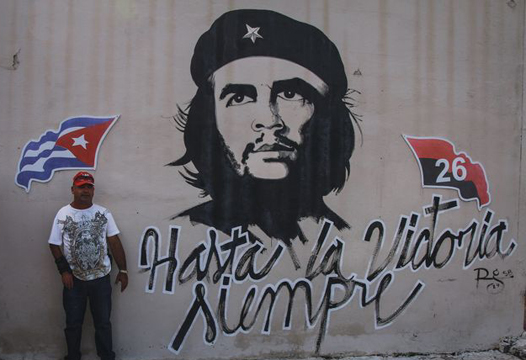
In Cuito Cuanavale there is a commemorative monument to that victory. There is an annual celebration throughout the country of Angola.
The incident portrayed in this play is an actual event recalled by Rajaluxmi Pillay as it occurred all around her when she was a prisoner of war in Cuito Cuanavale.
Characters:-
Soldier 1. Afrikaner White.
Soldier 2. Afrikaner White.
Soldier 3. Bantu Black.
(In a blackout, sounds of a war zone: artillery barrage explosions, aeroplane dog-fights in the air, soldiers running, falling, shouting, groaning. Lights up. Soldier 1 and Soldier 2 enter separately. They have rifles. An explosion throws them to the ground next to each other. They lie still, keeping their heads on the ground. They time their speaking to be at times when there are no nearby explosions.)
Soldier 1: Where did all this come from? Aren't we supposed to be winning?
Soldier 2: I thought so, too.
Soldier 1: Do you know what our orders are in this mess?
Soldier 2: No. Haven't seen a commanding officer around.
Soldier 1: Colonel Magnus Malan. Supervising laying the minefield back there. You're not with us?
Soldier 2: Colonel Breytenbach sent me to your Magnus Malan with an urgent message.
Soldier 1: A secret?
Soldier 2: Not to you. This attack is coming from sector three.
Soldier 1: The bridge?
Soldier 2: Yes.
Soldier 1: This side of the bridge?
Soldier 2: Seems like. The enemy does not have guns big enough for this barrage to be coming from the other side of the bridge.
Soldier 1: This must mean the enemy has crossed the bridge. (An explosion brings flying debris that covers them. They stay down on the ground. A few seconds pass. Soldier 2 struggles free, but stays on the ground. He looks around for Soldier 1. He sees movement in the rubble. He moves closer. Soldier 1 is struggling up through the rubble. Soldier 2 hastily helps him out.)
Soldier 2: You okay?
Soldier 1: I can move. Lots of pain, but nothing broken. I think. I hope.
Soldier 2: Me, too.
Soldier 1: Which way is this barrage moving? I can't tell. Seems to be all around us.
Soldier 2: Breytenbach guesses it is the minefield they're after. The message I have for Malan is to clear the minefield and retreat that way.
Soldier 1: Retreat? That minefield was just a precaution while we were winning. If the bridge has been taken, what's the point? The route through the minefield comes up at the river under the bridge.
Soldier 2: Which will put us behind the enemy if the bridge has been taken. My message was that Colonel Shabalala's men have either gone over to the enemy, or are refusing to defend the bridge. (Pause. Soldier 1 is speechless. They move about on the ground for better comfort.) Can't say I am surprised. I never trusted Blacks under Black commanders. They should have been under White commanders.
Soldier 1: Colonel Shabalala's unit has been crucial. They have been performing flawlessly. Light casualties. Always in the lead in an assault. That's why they were put in charge of the bridge.
Soldier 2: Then, what happened?
Soldier 1: Battle weary, I guess.
Soldier 2: Whatever it is, it's serious enough for Botha himself, President of South Africa, to be flying in tonight.
Soldier 1: Botha's coming here, that old crocodile?
Soldier 2: It's the rumour. But I'll believe it when I see it. My message to Malan from Breytenbach is to retreat through that minefield and come up to the bridge from the river. (They aim their rifles toward movement off-stage. Soldier 3 enters. He is a medical officer. He carries his medical bag. He does not have a rifle.)
Soldier 3: Anybody need my services?
Soldier 1: Water to drink?
Soldier 3: Yes. (He takes out from his bag a bottle of water. He gives it to Soldier 1. Soldier 1 takes it and drinks. Soldier 3 talks to Soldier 1.) That's the last one. Share it with him. I have to move on. (An explosion, not near enough to send debris their way. They crouch instinctively, anyway.)
Soldier 1: (He has handed the water bottle to Soldier 2.) I don't remember you.
Soldier 3: Colonel Shabalala's unit.
Soldier 1: I thought Shabalala was guarding the bridge.
Soldier 3: He was. He's dead. His dying order was for us to retreat. Breytenbach met us. We are launching a counter-attack on the bridge.
Soldier 2: The enemy took the bridge?
Soldier 3: Yes.
Soldier 1: How many of you not part of the counter-attack?
Soldier 3: Twelve of us. Breytenbach sent us to help with clearing a minefield around here.
Soldier 2: Let's go find Malan.
Soldier 3: Colonel Magnus Malan? The commanding officer?
Soldier 1: Yes.
Soldier 3: He is dead. At least I think it was him. Body was headless. I took his identity tags. Somebody has to take charge. That minefield has to be cleared.
Soldier 1: Just where is General Geldenhuys in all of this?
Soldier 3: Don’t know. Haven’t seen him in days.
Soldier 2: Let's round up whoever we can.
Soldier 3: Colonel said the Cubans are using civilians on the front line. We are to regard those civilians as uniformed enemies.
(There
is an explosion. Ghastly screams in the blinding light. Blackout.)
Contact
Ezra
(Unless
you
type
the
author's name
in
the subject
line
of the message
we
won't know where to send it.)
*****
If the
link to the letter doesn't work you can copy
and
paste in this address: preserve@storyhouse.org
Ezra's Story list and biography
The Preservation Foundation, Inc., A Nonprofit Book Publisher